


Lean, mean and frequently terrifying, The Birthday Party (Histoires de la nuit) is a home-invasion thriller in the vein of films like Funny Games and Speak No Evil, even if it stops well short of the sadistic shocks of either of them. Adapted from a French bestseller by Laurent Mauvignier, writer-director Léa Mysius’ third feature shares its remote setting and appetite for darkness with her 2022 fantasy drama The Five Devils, though it’s more cohesive than that scattershot genre-bender. A pileup of movie-ish improbabilities in the climactic act notwithsanding, the new film is a taut nail-biter with a strong cast.
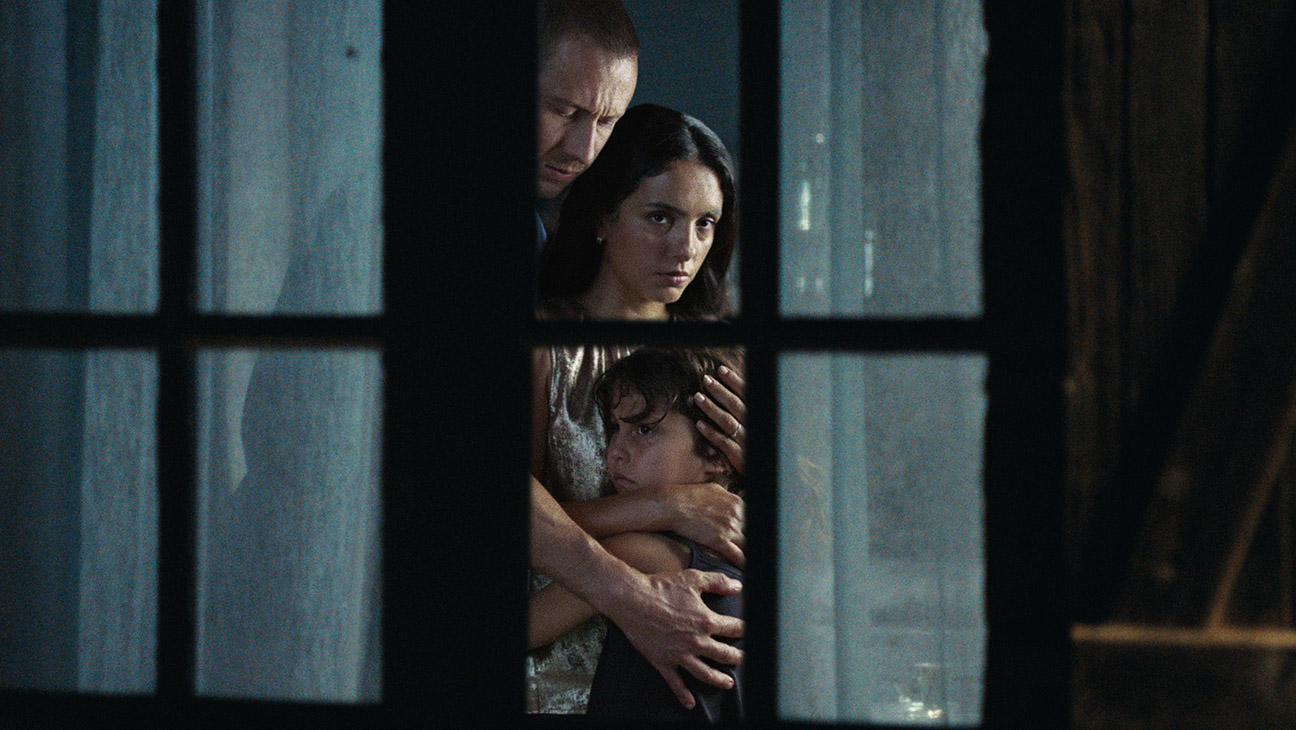
The family put through the wringer of one long hellish night are the Bergognes — hard-working Thomas (Bastien Bouillon), who runs the small dairy farm where they live in rural Western France; his wife Nora (Hafsia Herzi), who gets a 40th birthday surprise when she’s named head of town-planning at her office job; and their smart preteen daughter, Ida (Tawba El Gharchi).
The Birthday Party
The Bottom Line
Highly watchable, though needs a new third act.
Venue: Cannes Film Festival (Competition)
Cast: Hafsia Herzi, Benoît Magimel, Bastien Bouillon, Monica Bellucci, Tawba El Gharchi, Paul Hamy, Alane Delhaye, Servane Ducorps, Tatia Tsuladze
Director: Léa Mysius
Screenwriter: Léa Mysius, based on the novel Histoires de la Nuit, by Laurent Mauvignier
1 hour 54 minutes
They have one sole neighbor, Cristina (Monica Bellucci), a well-heeled Italian artist who lives and works in a distressed-chic studio that looks to be a converted barn, where Ida regularly stops by on the way home from school to paint.
One key bit of foreshadowing happens early on when Nora freaks out over a video Ida posted online of the family dancing. Despite her daughter’s protestations about losing her 60,000 views, Nora demands that she take the video down, making it clear she does not want to be seen on socials.
Another significant plot signal is the arrival while the family are out of a shifty-looking dude, later identified as Flo (Paul Hamy), who claims to Cristina that he’s come to look at the farmhouse for sale. Cristina knows of no plans for the Bergognes to sell, and her eagerness to get rid of him seems a sharp intuition.
Flo doesn’t stay gone for long, returning first with a seemingly dim-bulb younger brother Bègue (Alane Delhaye), who spent two years in a psych ward, followed by eldest sibling Franck (Benoît Magimel), who clearly calls the shots. When Ida shows up at Cristina’s after school, the place appears empty; even the painter’s dog is gone. But the brothers are merely keeping her hidden to prevent her from warning Thomas when he gets back.
As much as the percolating dread and looming threat of violence, Mysius’ script digs into the psychological violation of intruders who have extensive intimate knowledge of the family. They know that Thomas bought the family farm at a time when the sector is struggling, and that financially, he’s in the hole. Franck and co. let him get inside the farmhouse and start stringing up decorations for Nora’s birthday party before making their presence felt.
Nora has a flat tire on the way home from work, which slows her arrival. When she does finally get back, Franck greets her with familiarity, calling her Leïla, and she assures him he has the wrong person. But Franck won’t be persuaded, making things increasingly spiky as the night progresses, and hinting at a past that makes Thomas wonder how well he knows his wife.
Mysius keeps this chilling negotiation phase humming, and all the characters are well-drawn. But the director really makes the material her own through her investment in the women, who are not just trembling in fear but quietly strategizing, trying to identify any weak points in Franck and his brothers that they can use.
Some of the best scenes involve Bègue, left alone in the studio to keep an eye on Cristina. He tries to act tough, but she finds his soft underbelly of vulnerability and coos sympathetically over the demeaning treatment he receives from his brothers. Bellucci is in good form as Cristina appears to be plotting a move but is smart enough not to rush it. She talks to Bègue about her art and it seems obvious that he’s unaccustomed to being spoken to like an intelligent adult. A glass of wine and a shared joint make their scenes seem almost like a mellow hang. Up to a point.
Next door, meanwhile, Nora is increasingly needled about the parts of her past kept secret from her family. When she’s forced to acknowledge her history with Franck, marital tensions and trust issues combine with the unpredictable nature of volatile strangers clearly not averse to brutal violence.
Through all this, Ida is encouraged to stay in the living room and watch cartoons on TV, but the kid is alert to everything that’s going on, even if she doesn’t fully understand it.
In addition to the women, the trio of thugs bring a punchy dynamic — Magimel has fully entered his Brando phase, his imposing physical presence as unsettling as his menacing words; the magnetic Hamy is a livewire bundle of cocky charm and danger; and Delhaye is almost touching as Bègue, whose lack of self-assurance makes him a poor fit for the criminal life, something he probably knows already.
The standout performance, however, is from Herzi — so memorable in Abdellatif Kechiche’s The Secret of the Grain and in Cannes last year with her latest work as director, the exquisite queer coming-of-age drama, The Little Sister. She’s a major talent who seems due for wider recognition on both sides of the camera.
Given how efficiently the movie crackles through the set-up and into the uncomfortable midsection in which anything could happen, it’s a shame Mysius fumbles the big finish. Too often, you are jarred out of the movie by nagging inattention to verisimilitude, like a character bleeding out from a gunshot wound, who puts his pain on hold to tend to matters of the heart. The unlikely skill with a rifle of another character seems like something out of the hoariest Western, a cliché that would be picked apart in any screenwriting for dummies class.
The track record of European genre movies being remade in America is all over the place, but this is one case in which some smart retooling of the wobbly third act could yield a viable property.
