


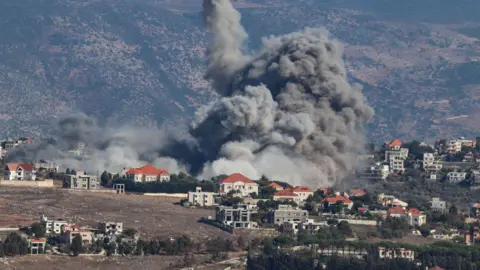
An Israeli brigade commander told NDTV that Hezbollah had prepared “Hamas‑like” attacks against Israel by building weapons caches, tunnels and fortified positions in southern Lebanon close to the border. Israeli forces say their operations, begun in October 2024, uncovered a militant infrastructure that posed a multi‑front threat alongside the Gaza war. The claims highlight how the Gaza conflict has widened into a simultaneous northern front that risks further regional escalation.
What the commander said
- Israeli troops that entered southern Lebanon in October 2024 reported finding weapons stockpiles, underground tunnels and hardened positions within hundreds of metres of Israeli territory, which they said were intended to target civilians and military sites in Israel.
- The same commander described the situation as an “existential threat” fought on multiple fronts — Gaza and Lebanon — and framed the Lebanese operations as pre‑emptive and defensive measures to disrupt planned attacks.
Additional reporting and context
- Hezbollah has repeatedly exchanged fire with Israel throughout 2024–2026, launching rocket and drone strikes after Israeli airstrikes killed group members; Hezbollah’s leadership has sometimes denied plans for mass civilian attacks while boasting of successful strikes on military targets.
- Israel has also publicly reported targeted strikes that killed senior Hezbollah figures in southern Lebanon, and both sides have presented these strikes as necessary to degrade adversary capabilities.
- Independent outlets have documented episodes in which Hezbollah fired substantial barrages (hundreds of rockets in some engagements) and used drones to strike deeper inside Israel, signaling an increase in operational reach on the Lebanese front.
Why this matters
- Multi‑front pressure: Fighting in Gaza coupled with persistent northern exchanges forces Israel to split resources and maintain readiness on two borders, raising risks of miscalculation.
- Tunnel warfare: Discovery of tunnels and close weapons caches mirrors tactics used on other fronts and presents a continuing challenge for border security and civilian safety.
- Escalation dynamics: Targeted killings and reciprocal strikes can spiral quickly; both Israeli military messaging and Hezbollah public statements suggest readiness to continue attacks unless objectives (retaliation, deterrence) are met.
- Civilian impact: Repeated exchanges have led to border‑area evacuations, infrastructure damage and a humanitarian dimension that complicates military options.
Editorial assessment
The NDTV interview with an Israeli field commander underscores a central risk of the present phase: localised tactical preparations — tunnels and arsenals sited near the border — can quickly become strategic flashpoints when paired with a larger, ongoing war in Gaza. Both sides use battlefield claims to shape domestic and international narratives: Israel to justify deep operations in Lebanon and Hezbollah to signal deterrence and support for Palestinian forces. That interplay increases the likelihood of periodic, intense exchanges rather than a stable ceasefire.
Short timeline
- Oct 2024: Israeli brigade operations enter southern Lebanon; troops report finding tunnels and weapons caches.
- 2024–2026: Periodic Hezbollah rocket and drone barrages into northern Israel as reciprocal strikes follow Israeli airstrikes that killed Hezbollah commanders; Israel reports targeted strikes in southern Lebanon.
- May 2026 reporting: NDTV publishes an interview quoting an Israeli commander describing Hezbollah’s preparations and the ongoing northern operations.
