


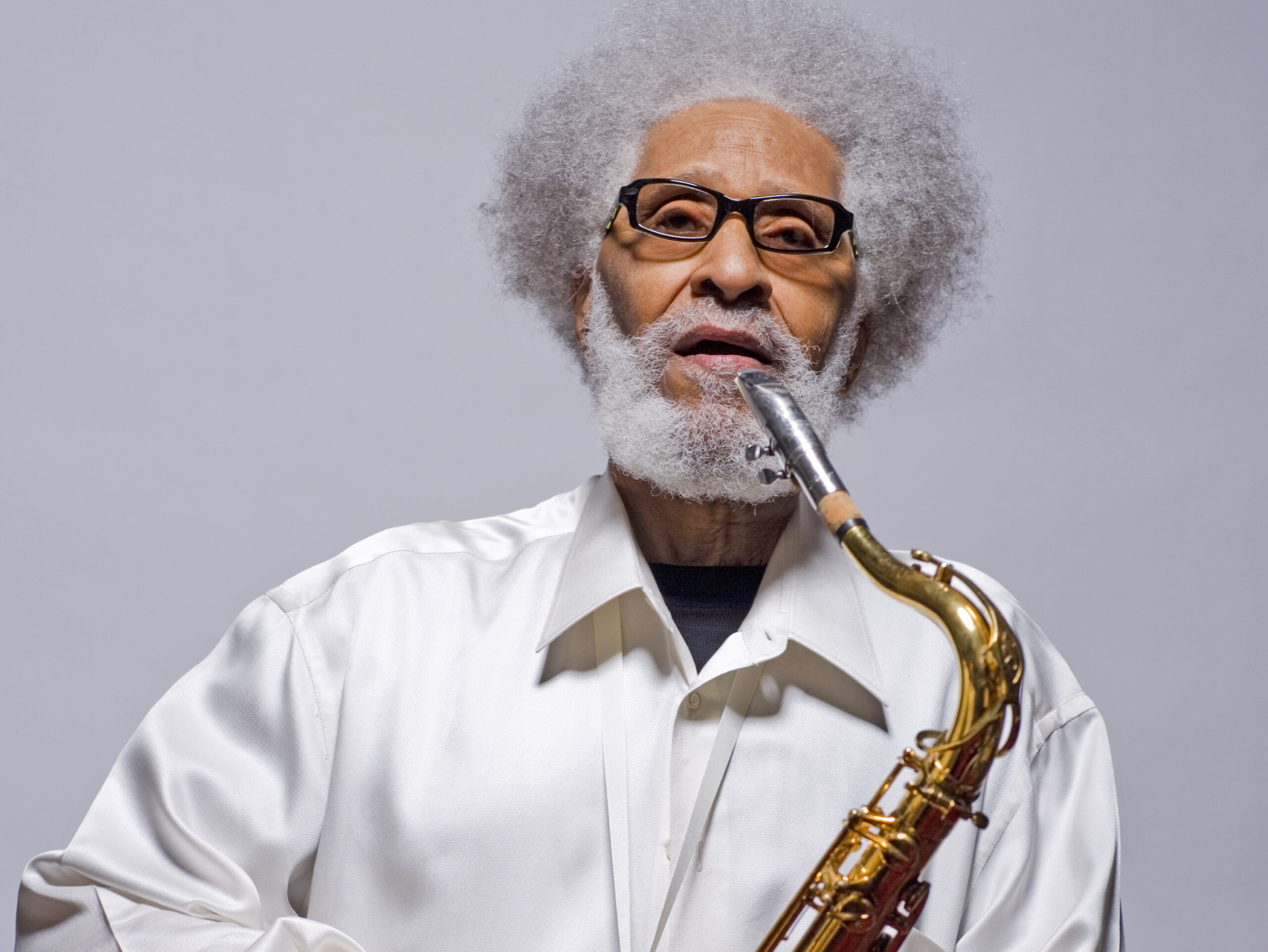
The last of the bebop giants is gone. Sonny Rollins, the tenor saxophone player who turned improvisation into a form of architectural storytelling, has died at 95. His family announced the death on Monday at his home in Woodstock, New York, without specifying a cause.
Rollins was not just a great player; he was a great thinker about what the saxophone could do. He built lines that felt both inevitable and surprising, weaving melodies that could stand alone as songs while still being stretched and reshaped in the moment. That combination—melodic clarity and spontaneous invention—made him a benchmark for improvisers across generations.
He was one of the final living links to the era when jazz stopped being dance music and became a serious art form, working alongside Miles Davis, Thelonious Monk, Charlie Parker and John Coltrane. His career in that space stretched from the late 1940s onward, with more than 60 albums as a bandleader and a catalog that includes some of the most recorded jazz standards ever, like “St. Thomas” from the 1956 album Saxophone Colossus.
The nickname “Saxophone Colossus” was not just a marketing label; it reflected how he played. He had a powerful tone, a sense of rhythm that could swing hard and a way of extending solos that felt like a continuous narrative rather than a series of riffs. Wynton Marsalis once called him the greatest improviser in jazz history, alongside Louis Armstrong, and Barack Obama, when presenting him with the Medal of Arts in 2011, said Rollins had inspired him to take risks he otherwise might not have attempted.
His personal life was harder than his music. Rollins struggled with heroin addiction in the early 1950s, and at one point committed an armed robbery to support his habit. He later described that period as despicable, saying he had alienated everyone except his mother. After a 10-month stint on Rikers Island, he entered a rehabilitation program and, by 1955, had overcome his addiction.
That clarity led to one of the most productive stretches in jazz. He released his first album as a bandleader in 1953, recorded more by the end of the 1950s and produced landmark records like Saxophone Colossus, Way Out West and Freedom Suite—a 20‑minute suite that was a plea for freedom during the civil‑rights movement.
In 1959, he took a two‑year break from recording and performing, practicing up to 15 hours a day on the Williamsburg Bridge to avoid disturbing his neighbors. That period of reflection led to his 1962 comeback album, The Bridge. He later studied yoga and philosophy in an Indian ashram, explored avant‑garde and fusion styles in the 1960s and 1970s, and incorporated Latin, R&B and funk influences into his work.
Rollins was also a witness to history. On 9/11, he and his wife Lucille lived six blocks from the World Trade Center and evacuated to upstate New York; he took only his saxophone. Days later, he performed a live set in Boston that became Without a Song: The 9/11 Concert, earning him a Grammy for best jazz instrumental solo. He later said he lost many possessions in the attacks but learned that possessions were not where the music was.
He toured and performed until 2014, when pulmonary fibrosis forced his retirement. He admitted in 2017 that he went through a period of depression but came out of it when he realized he should be grateful for the life he had lived as a musician. He received a lifetime achievement Grammy in 2004 and remained a touchstone for younger players long after he stopped touring.
By the time he died, Rollins was one of the last of the golden‑era jazz giants still alive. He was not just a surviving figure; he was a living line to the moment when jazz became what it is—an art form defined by improvisation, individuality and the ability to make the personal universal.
